
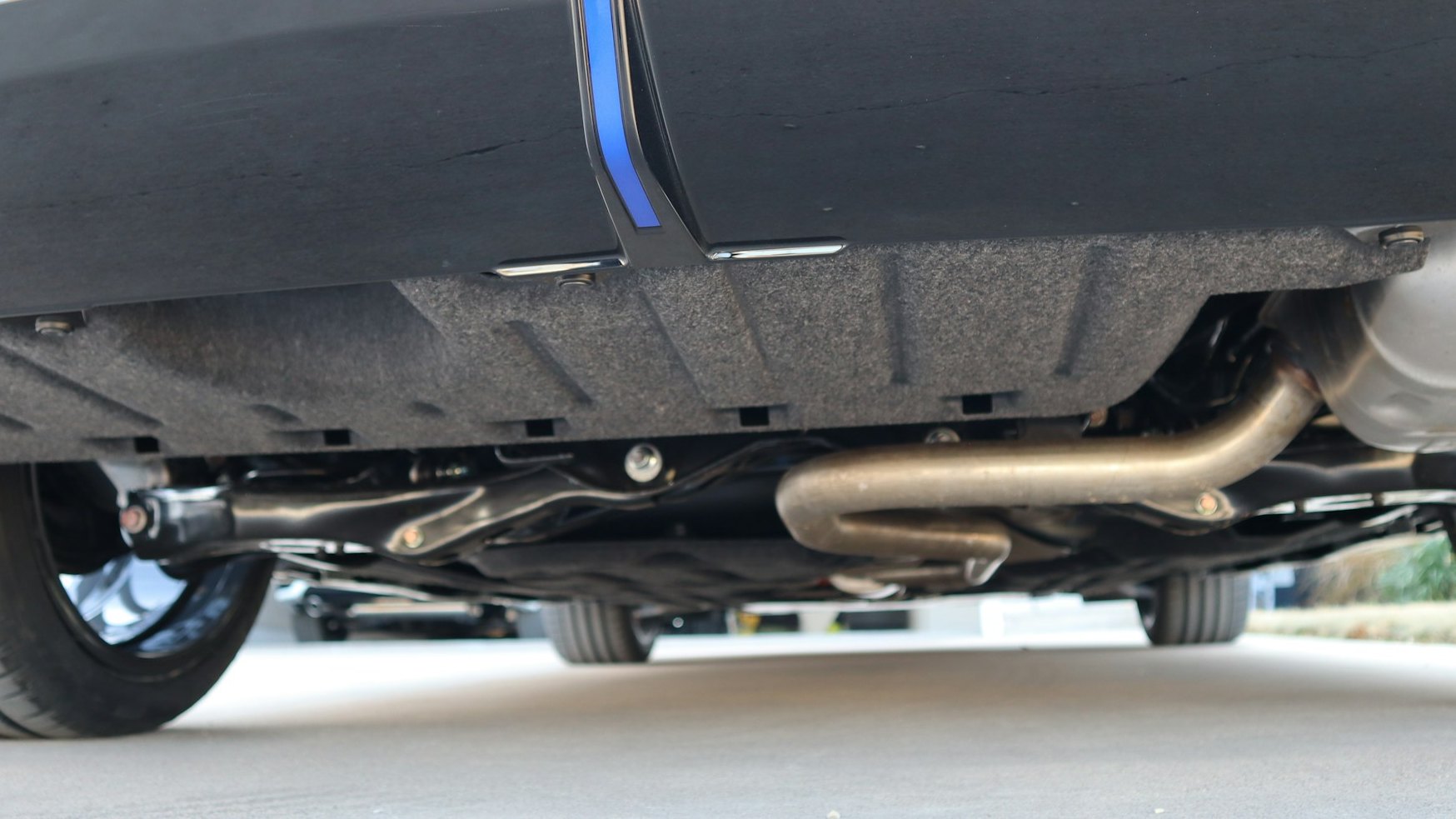
A new vehicle may look like the easiest possible candidate for undercoating: the metal is relatively clean, there is little or no rust to work around, and the underside has not yet accumulated years of road grime.
That does not mean every new vehicle needs additional undercoating.
Modern vehicles already leave the factory with corrosion-protection measures that vary by manufacturer and model. Supplemental rustproofing can still make sense for some owners—especially where road salt, brine, moisture, long ownership, or repeated winter exposure are major concerns—but the decision should start with the vehicle’s existing protection, the owner’s manual and warranty, and the type of aftermarket product being considered.
The most useful question is not simply:
“Is undercoating good for a new car?”
It is:
“Does this specific vehicle, in this environment, benefit from this specific coating system?”
The short answer
You can undercoat a new vehicle, but it is not automatically necessary.
A new vehicle may be a good time to apply a compatible corrosion-protection product because the underside is usually cleaner and has less existing rust. Some aftermarket products are specifically designed for new or relatively clean surfaces.
But a new vehicle may already have factory-applied corrosion protection, cavity treatments, sealers, e-coat, stone-chip protection, underbody coatings, or other model-specific measures. Adding another coating without checking compatibility can be unnecessary or can complicate later service.
Before undercoating a new vehicle:
- Read the owner’s manual and warranty.
- Identify what factory coatings or treatments are already present.
- Decide whether you want a fluid/non-drying treatment or a film-forming coating.
- Check the aftermarket product’s compatibility with painted, primed, e-coated, galvanized, plastic, rubber, electrical and high-heat areas.
- Avoid treating areas the vehicle or product manufacturer says should not be coated.
- Keep records of the product and application.
For the differences between the main coating approaches, see Oil-Based vs. Rubberized Undercoating: How They Differ.
New vehicles already have corrosion protection
A new vehicle’s underside should not be thought of as untreated bare metal.
Factory corrosion protection varies by manufacturer, vehicle and component.
Because factory systems differ, an aftermarket coating should be treated as an additional system rather than assumed to be the vehicle’s first line of corrosion protection.
Current manufacturer warranty and maintenance documents also recognize factory corrosion protection. Chevrolet’s 2026 Silverado 1500 owner’s manual says original manufacturer replacement sheet-metal parts provide corrosion protection. It also tells owners that if original manufacturer replacement parts are not used, the body repair shop should apply anti-corrosion material to the repaired or replaced parts.
The practical takeaway is simple:
Find out what is already on the vehicle before adding something over it.
A corrosion warranty is not the same as complete rust protection
New vehicles may include corrosion coverage, but warranty language is narrower than many owners assume.
For example, Chevrolet’s 2026 New Vehicle Limited Warranty covers body sheet-metal surface corrosion for 3 years or 36,000 miles and rust-through corrosion for 6 years or 100,000 miles, subject to its terms and exclusions.
Toyota’s 2025 Corolla Hatchback warranty provides 60 months of corrosion-perforation coverage regardless of mileage, again subject to exclusions.
Those warranties focus on defined failures such as body-panel corrosion or perforation. They do not mean that every underbody component, cosmetic rust spot, stone chip, scratch, fastener, suspension part or exposed steel surface will be repaired under corrosion coverage.
A warranty therefore should not be interpreted as proof that additional corrosion prevention is pointless—but it also should not be ignored before an aftermarket coating is applied.
When undercoating a new vehicle may make sense
Supplemental rust protection may be more attractive when the vehicle will see:
- frequent road salt or liquid brine;
- repeated winter driving;
- long-term ownership;
- regular exposure to wet, muddy or corrosive road conditions;
- an environment where the underbody stays wet or contaminated for long periods;
- or use that makes seams, cavities and exposed underbody areas a particular concern.
Current Chevrolet maintenance guidance provides a useful example of why environment matters. The 2026 Silverado 1500 owner’s manual instructs owners to flush corrosive materials from the underbody with plain water every six months and to clean areas where mud and debris collect.
That recommendation exists even though the vehicle already has factory corrosion protection.
Additional undercoating is therefore best viewed as one possible part of a corrosion-control plan—not a substitute for washing, inspection and repair of damaged coatings.
Why a new vehicle can be easier to protect
If you decide to add corrosion protection, doing it while the vehicle is new has one obvious advantage:
There is usually less corrosion and contamination to work around.
Film-forming products depend heavily on surface condition and adhesion. Starting with a clean, intact factory surface can remove some of the problems that occur when coating an older, rusty frame.
Some products are specifically marketed around this use.
Woolwax’s current Hard-On product page and application instructions position the coating for newer or new vehicle surfaces without existing surface rust and direct rusted frames toward Original Woolwax. Woolwax’s current sell sheet, however, says Hard-On can be applied to new, used, slightly rusted or imperfect surfaces, but not surfaces with significant surface rust. Because Woolwax’s own materials conflict on existing rust, follow the documentation supplied with your specific product or contact Woolwax if the surface is already rusted. Hard-On is described as a permanent coating that is not intended to be removed.
That is an important tradeoff.
A permanent or hard-shell product may suit an owner who wants that type of finish, but it deserves more scrutiny before application because the coating may remain on the vehicle for years.
If you prefer a renewable, non-drying system instead, see Oil-Based vs. Rubberized Undercoating: How They Differ.
Fluid/non-drying treatment on a new vehicle
Fluid rustproofing systems take a different approach from permanent hard coatings.
Krown describes its product as a petroleum-based rust inhibitor that remains active and is thin enough to penetrate seams and areas around spot welds. Krown recommends annual treatment for continuous protection.
A non-drying treatment can make sense for owners who value penetration into seams and cavities and are comfortable with periodic reapplication.
That does not make it automatically better for every new vehicle.
You still need to know:
- what materials are already on the vehicle;
- whether the product is compatible with those materials;
- where the manufacturer wants the product applied;
- whether the application requires drilling access holes;
- what areas must be avoided;
- and what maintenance interval the product requires.
Do not choose a fluid coating merely because it is described as “oil-based.” Different products use different formulations and application methods.
Film-forming coatings on a new vehicle
Film-forming undercoatings dry or cure into a surface layer.
On a clean new vehicle, that may sound straightforward, but adhesion and compatibility still matter.
Rust-Oleum Professional Undercoating, for example, requires surfaces to be free of dirt, dust, oil, grease and other contamination. Its technical data sheet says the entire surface should be sanded for proper adhesion and warns against use on surfaces that will come into direct contact with heat or high temperatures such as mufflers or exhaust components.
That illustrates an important point:
“New” does not mean “spray everything.”
A coating intended to bond to the surface may require preparation that you may not want to perform on intact factory finishes. Before sanding, scuffing, degreasing or coating a new vehicle, verify that the procedure is appropriate for the exact surface involved.
Do not cover factory coatings blindly
One of the biggest mistakes on a new vehicle is assuming more coating must always mean more protection.
Factory coatings may serve specific functions. Some areas need to remain visible for inspection or service. Other surfaces may use materials that are incompatible with the aftermarket product you are considering.
The safest approach is product- and vehicle-specific:
- identify the existing substrate or factory coating;
- read the aftermarket technical sheet;
- check the vehicle owner’s or service information;
- avoid high-heat areas when the coating prohibits them;
- preserve drain paths, labels, service access and inspection points where required;
- and do not remove sound factory corrosion protection simply to replace it with an aftermarket coating.
If you cannot determine what a surface is or whether it should be coated, ask the vehicle manufacturer, dealer service department or coating manufacturer before applying the product.
What about hybrids and EVs?
Electrified vehicles deserve extra attention because underbody areas can contain high-voltage cables, connectors, battery housings, vents and service markings.
Do not assume that a product marketed as vehicle-safe should be applied indiscriminately around a high-voltage system.
For example, the 2026 Chevrolet BrightDrop owner’s manual warns owners not to direct high-pressure spray at or around high-voltage connectors, cables or vents because high pressure can damage seals and battery components.
That warning is about washing rather than undercoating, but it demonstrates why vehicle-specific service information matters around high-voltage systems.
If you own an EV or hybrid, check the owner’s manual and manufacturer guidance before applying any third-party coating around high-voltage components.
Will undercoating void a new-car warranty?
An aftermarket product does not automatically void an entire vehicle warranty simply because it was not supplied by the vehicle manufacturer.
The U.S. Federal Trade Commission says manufacturers generally cannot deny warranty coverage solely because a consumer used an aftermarket part or independent service. However, warranty coverage can be denied for damage that the manufacturer can demonstrate was caused by the aftermarket product, part or improper service.
That distinction matters for undercoating.
Adding rustproofing should not be described as automatically voiding the whole warranty, but neither should anyone promise that every consequence of an aftermarket coating will be covered.
Vehicle warranties can also contain exclusions for alterations, improper repairs or damage from outside causes.
Toyota’s corrosion warranty, for example, lists alteration or tampering and improper repairs among exclusions from its New Vehicle Limited Warranty, while Chevrolet’s corrosion warranty excludes certain surface corrosion resulting from stone chips, dents or scratches.
Before applying a permanent coating to a new vehicle:
- read the actual warranty;
- save the coating manufacturer’s technical information;
- keep the application invoice or your own records;
- photograph the underside before and after treatment if practical;
- and ask the vehicle manufacturer for written clarification if you are concerned about a specific component or procedure.
Does a dealer’s undercoating package mean you need one?
Not necessarily.
A dealer may offer rustproofing or undercoating as an add-on, but the fact that it is offered does not establish that the vehicle requires it.
Evaluate the same questions you would for any other product:
- What exact product is being applied?
- Is it a fluid treatment, cavity wax or permanent coating?
- What parts of the vehicle will be treated?
- Are holes drilled?
- What areas are masked or avoided?
- Is reapplication required?
- Is there a separate rustproofing warranty?
- Does that warranty overlap with, supplement or differ from the vehicle manufacturer’s corrosion warranty?
- Who handles claims if there is a problem?
Do not buy an undercoating package simply because you are told a new vehicle is unprotected without it.
Should you undercoat immediately or wait?
There is no universal answer.
Applying early may make sense when:
- you already know you want supplemental corrosion protection;
- the vehicle will immediately enter a high-salt environment;
- the chosen product is compatible with the factory surfaces;
- the product specifically favors new or rust-free surfaces;
- and you intend to keep the vehicle long enough to maintain the system.
Waiting may make sense when:
- you have not yet identified the factory coatings;
- the vehicle will see little corrosive exposure;
- you are unsure which system you want;
- the proposed coating requires permanent changes or aggressive surface preparation;
- warranty or service questions remain unresolved;
- or you want to inspect how the factory protection performs before adding another layer.
If you wait, do not wait until severe rust develops before thinking about corrosion prevention.
Regular washing, inspection and prompt repair of damaged protective finishes still matter.
Undercoating does not replace washing
Even a coated vehicle should still be cleaned and inspected.
Chevrolet’s current Silverado maintenance schedule tells owners to flush corrosive material from the underbody with plain water every six months, paying attention to areas where mud and debris can collect.
That is a useful general reminder:
A corrosion-protection coating is not permission to ignore salt, mud or coating damage indefinitely.
Follow the cleaning instructions for your specific vehicle and your specific coating. Some products may also have their own restrictions on pressure washing, cleaners or reapplication.
A practical decision checklist
Before undercoating a new vehicle, answer these questions:
1. What protection is already present?
Look for factory e-coat, painted surfaces, seam sealer, cavity wax, plastic shields, underbody coating or other manufacturer treatments.
2. What environment will the vehicle see?
Frequent salt and brine exposure creates a different decision than a vehicle that rarely sees winter road treatment.
3. How long do you plan to keep it?
Supplemental rustproofing is easier to justify when you expect to own the vehicle for many years and are willing to maintain the treatment.
4. What kind of coating do you actually want?
Decide between a renewable fluid/non-drying system and a film-forming coating rather than treating all undercoatings as interchangeable.
5. What preparation does the product require?
Do not sand, strip or alter intact factory coatings unless the chosen system specifically requires it and you have confirmed that doing so is appropriate.
6. What areas must remain uncoated?
Check the product instructions and vehicle information for restrictions around heat, moving parts, service areas, electrical equipment, drains and other sensitive locations.
7. What does the warranty actually say?
Read the corrosion and general warranty terms rather than relying on a salesperson’s summary.
8. What maintenance will the new coating require?
Some systems require annual or periodic renewal. Others are marketed as long-term or permanent. Neither description eliminates the need for inspection.
FAQ
Do new cars already have rust protection?
Yes, but the type and extent vary by manufacturer and model.
Manufacturers may use combinations of coated steel, primers, e-coat, sealers, cavity treatments, stone-chip protection and underbody coatings. Do not assume every part of every new vehicle receives the same protection.
Is aftermarket undercoating necessary on a brand-new car?
Not automatically.
It may be worthwhile in corrosive environments or for long-term ownership, but the decision should account for factory protection, the exact product, maintenance requirements and warranty considerations.
Is it better to undercoat a car when it is new?
A new, clean vehicle can be easier to treat because there is less rust and contamination. Some coatings are specifically designed for clean or new surfaces.
That does not mean every coating should be applied immediately or over every factory surface.
Can undercoating void my warranty?
The use of an aftermarket product does not automatically void the entire warranty. FTC guidance says warranty coverage generally cannot be denied simply because aftermarket parts or independent service were used.
However, a manufacturer may deny coverage for damage it can show was caused by the aftermarket product or improper service. Read the actual warranty for your vehicle.
Should I undercoat a leased vehicle?
Usually, avoid permanent modifications unless the lease terms and vehicle manufacturer allow them.
A removable or maintenance-type product may still raise questions about return condition, dealer expectations or cleaning. Check the lease agreement before applying anything.
Should I undercoat a new truck?
The same principles apply to trucks.
Consider the existing factory protection, frame and body materials, winter exposure, intended ownership period and the coating manufacturer’s instructions. A truck that sees heavy winter salt may justify a different corrosion strategy than one used primarily in a dry climate.
Do I still need to wash the underbody after undercoating?
Yes, unless the coating manufacturer gives different cleaning instructions.
Factory maintenance guidance can still call for underbody cleaning to remove corrosive material. Inspect the coating afterward and follow its maintenance instructions.
Is dealer-applied undercoating worth it?
It depends on the product, price, coverage, warranty and quality of application.
Ask the dealer for the exact product name, technical sheet, application procedure, reapplication requirements and written warranty before deciding.
Bottom line
A new vehicle is often the easiest time to start a corrosion-prevention program, but that does not mean every new vehicle needs another coating.
Factory protection already exists and varies by model. Supplemental undercoating may make sense when salt exposure is high, ownership will be long, or you want additional protection in seams, cavities or exposed areas.
The safest approach is to:
- understand the factory protection first;
- choose a coating system intentionally;
- verify compatibility with the vehicle;
- read the warranty and owner information;
- keep sensitive and high-heat areas clear where required;
- and continue washing and inspecting the underbody after treatment.
Undercoating should supplement a corrosion-prevention plan, not replace basic maintenance or hide a surface you have not evaluated.
Learn more: Oil-Based vs. Rubberized Undercoating · Can You Spray Undercoating Over Rust? · How to Prepare a Rusty Truck Frame for Undercoating · Undercoating · Rust Prevention
Sources
Underbody Lab has not independently tested the products discussed in this guide. Product-specific information is based on manufacturer and government documentation unless otherwise noted.
- 2026 Chevrolet Silverado 1500 Owner Manual (GM, June 2026 revision)
- 2026 Chevrolet Limited Warranty and Owner Assistance Information (GM)
- Toyota 2025 Corolla Hatchback Warranty & Maintenance Guide
- U.S. Federal Trade Commission — Auto Warranties and Auto Service Contracts
- U.S. Federal Trade Commission — FTC Offers Tips on Making the Most of Your Auto Warranty (Jan. 14, 2011)
- Krown — rust protection and vehicle maintenance FAQs
- Woolwax USA — Hard-On product page
- Woolwax USA — Hard-On application instructions
- Woolwax USA — Hard-On sell sheet
- Rust-Oleum Automotive Professional Undercoating — technical data sheet (ATO-94, Form GDH-411, rev. 03/28/18)
- 2026 Chevrolet BrightDrop 400/600 Owner Manual (GM)