
Cavity wax and undercoating are both used for vehicle corrosion protection, but they usually address different locations.
Cavity wax is typically intended for hidden body sections and internal joints. Undercoating typically refers to protection applied to exposed underside surfaces.
The distinction is useful, but it is not absolute. Some corrosion-protection products are specified for both internal and external surfaces. Others are designed primarily for enclosed cavities.
That means the right question is not simply whether the can says “wax” or “undercoating.” It is whether the exact product is intended for the surface, exposure and application method involved.
Underbody Lab has not independently tested cavity waxes and undercoatings against each other. Product examples below are based on manufacturer documentation and identified as such. General engineering references explain mechanisms, not which retail product lasts longest on your vehicle.
Cavity wax vs. undercoating at a glance
| Question | How the two uses differ |
|---|---|
| Where is cavity wax usually used? | Inside doors, rocker panels, pillars, frame rails and other enclosed sections, where the product and vehicle instructions permit it |
| Where is undercoating usually used? | On suitable exposed underside and wheel-well surfaces; intended coverage varies by product |
| What matters inside a cavity? | Access, internal coverage, penetration into joints and compatibility with existing materials |
| What matters on exposed surfaces? | Coverage and suitability for road spray, washing, debris and mechanical wear |
| Does cavity wax always harden? | No. Some remain soft; others dry to flexible or non-sticky films |
| Can one product cover both locations? | Sometimes, if its documentation specifies both uses |
| Does an underside spray protect every cavity? | Exterior coverage alone does not establish internal coverage |
| Which lasts longer? | The category labels do not establish a universal service-life ranking |
What is a vehicle cavity?
A cavity is an enclosed or partly enclosed section that cannot be treated like an open, visible panel.
Examples include the spaces inside rocker panels, doors, pillars and some frame rails. Folded panel edges and overlapping joints can also create concealed surfaces that need attention during corrosion protection.
The relevant distinction is between the outside of the section and the surfaces inside it.
Spraying the outside of a rocker panel does not demonstrate that a protective film reached its interior. Likewise, coating the visible face of a frame rail does not establish coverage inside a boxed section.
Access and application method therefore belong in the treatment plan alongside product selection.
What does cavity wax do?
Cavity wax is a corrosion-protection material intended to reach and protect internal automotive surfaces. Depending on the formulation, manufacturer descriptions may emphasize flow, creep, water displacement or a protective film that remains flexible.
For example, 3M describes Cavity Wax Plus as a non-hardening, self-healing product for internal body panels, frame rails and structural enclosures. Its stated uses include internal joints and hem flanges where factory e-coat may have been compromised. [1]
Those are product-specific characteristics. They should not be assumed for every wax sold for automotive use.
The independent engineering background is consistent with this range of behavior. In Chapter 23 of Uhlig’s Corrosion Handbook, P. R. Roberge describes corrosion-prevention compounds with different film-forming materials and final film characteristics, including soft, semihard and hard films. He also discusses water-displacing compounds that spread into cracks and crevices. [11]
That explains why the formulation matters. It does not rank the products in this article.
What does undercoating mean?
Undercoating describes an application location more clearly than a single chemistry.
Products marketed for underside protection can include renewable fluid treatments and coatings that dry or cure into a film. Their preparation, compatibility and maintenance requirements can differ considerably.
For example, Rust-Oleum Professional Undercoating is described by its manufacturer as a rubberized coating for bare or primed metal, including underbody and wheel-well applications. [8]
Fluid Film takes a different approach. Its manufacturer describes a non-drying, soft protective film and lists both undercoating and uses inside doors and rocker panels. [7]
These examples show why “undercoating” should not be treated as synonymous with “hard shell.” For the broader distinction, see Oil-Based vs. Rubberized Undercoating: How They Differ.
Cavity wax does not always dry hard
Wax products can behave differently after application:
- 3M Cavity Wax Plus: 3M describes it as remaining soft and pliable. [1]
- TEROSON WX 400: Henkel says it dries to a non-sticky, water-repellent film and has good creeping qualities. [4]
- Würth Body Protection Wax: Würth describes the product as non-hardening, water-displacing and capable of creeping into difficult folds. [5]
- DINITROL 3650: DINITROL says it forms a flexible protective film after drying and is suitable for cavities, doors and vehicle parts. [6]
Drying and hardening should not be used interchangeably. A product can lose its carrier and leave a flexible film rather than a rigid shell.
The useful comparison is the film the specific formulation leaves, where it is approved for use and how it is applied. Our Lanolin vs. Wax-Based Undercoating guide explores that formulation distinction in more detail.
Can cavity wax be used on the exposed underside?
Only when the exact product’s instructions support that application.
A specification for internal panels is not evidence that the same product is suitable for every exposed underbody location. Do not infer external-use approval from the word “wax,” a corrosion claim or the appearance of the film.
There are products with overlapping uses. DINITROL 3125 HS is described by its manufacturer as a wax-based corrosion-protection product for both internal and external vehicle surfaces. [9]
That is evidence about 3125 HS’s intended applications. It does not establish the same approval for another DINITROL product, another cavity wax or every external component.
If a product’s documentation lists cavities but says nothing about exposed underside use, obtain clarification before extending its application beyond the documented scope.
Can ordinary undercoating be sprayed inside cavities?
The same principle applies in the opposite direction.
A product intended for visible underside panels should not automatically be used inside doors, pillars or boxed sections. Check whether its instructions cover internal application, appropriate equipment and compatibility with the materials present.
A visible coating at an access hole is not proof that the far end, upper surfaces or concealed joints received adequate coverage. For those locations, the application method must address the internal geometry.
Some fluid products have documented internal and external uses. Fluid Film’s automotive application list is one example. [7] That overlap does not make every undercoating a cavity treatment.
Why creep and a cavity wand matter
Two different questions need answers:
- Can the applicator deliver material to the internal surfaces?
- Can the material reach the joints or folds that need protection?
A wand addresses access and spray distribution. Creep describes movement of the product into adjoining spaces. Neither should be treated as a guarantee of complete coverage in an unknown cavity.
3M’s product documentation describes 360-degree spray wands for enclosed sections. Its 2024 cavity-wax procedure instructs technicians to insert the wand and spray while withdrawing it. [1, 3]
Those instructions illustrate why directing an ordinary spray nozzle toward an opening is not necessarily equivalent to a documented cavity application.
Use the equipment and application sequence specified for the product and vehicle. Do not assume one pass, one wand length or one coating quantity suits every section.
Hidden joints and exposed panels face different challenges
AMPP’s crevice-corrosion guidance identifies lap joints, deposits and fastener interfaces as locations where restricted transport can create localized corrosion environments. It describes changes including oxygen depletion, acidification and chloride buildup. [10]
That provides engineering context for paying attention to sheltered joints. It does not establish that every vehicle cavity is undergoing classical crevice corrosion.
For an internal treatment, reaching the concealed surface may be a central challenge. For an exposed underside treatment, suitability for the actual road and cleaning exposure also matters.
Internal coverage and external durability are separate questions. A product’s ability to creep into a fold does not establish its resistance to exposed mechanical wear. A durable-looking exterior film does not demonstrate coverage inside a joint.
See Why Seams and Crevices Rust Differently for the role of geometry, and How Rust Protection Products Are Actually Tested for why the test must match the intended use.
Cavity treatment is part of a protection system
Cavity wax should not be assumed to replace primer, seam sealer or every other factory protective material.
As a vehicle-specific example, Tesla’s 2022–2024 Model Y Structural Pack collision-repair manual calls for internal anti-corrosion application after refinishing, using a suitable 360-degree wand through factory access holes. It separately addresses seam-sealer restoration. [12]
That is a repair procedure for the vehicles covered by that manual, not a universal aftermarket rustproofing instruction.
Its relevance is the distinction between protecting internal surfaces and restoring other parts of the system. Follow the applicable vehicle procedure rather than transferring a different model’s instructions to your car.
Preparation and existing rust still matter
Neither “cavity wax” nor “undercoating” is permission to cover a surface without evaluating it.
The preparation requirements are product-specific. 3M’s 2024 cavity-wax procedure includes pre-cleaning and defers to the relevant manufacturer’s cleaning instructions. [3]
Rust-Oleum’s ATO-38 sheet requires removal of dirt, grease, oil, salt and chemical contamination, thorough drying and removal of loose paint and rust. [8]
DINITROL describes 3125 HS as suitable for older vehicles with visible underbody corrosion and discusses use with DINITROL ML on severely corroded areas. [9] That manufacturer statement does not establish that spraying a product restores lost metal or makes a damaged structural section safe.
Water displacement also should not be interpreted as removal of every contaminant. Use the specified preparation procedure; do not substitute a marketing description for it.
If corrosion has compromised a structural area, assess the condition and repair needs before treating the surface.
Preserve drainage and verify compatibility
As a practical application precaution, identify factory drains and keep their intended paths open. Do not use corrosion protection as a way to plug a drain or fill an unknown cavity.
Distinguish an approved access opening from a hole you would have to create. The Tesla procedure above uses factory access holes; it does not authorize drilling other vehicles. [12]
Compatibility needs the same attention. Fluid Film warns that its product may swell non-oil-resistant rubber and soften some existing undercoatings. [7]
Product restrictions also matter near heat and moving parts. The 3M Cavity Wax Plus technical sheet prohibits application on or near potential ignition sources, including exhaust components, and on moving parts. Rust-Oleum’s sheet excludes direct high-heat exposure such as mufflers and exhaust components. [2, 8]
Before application, identify what must be masked or left clear under the vehicle and product instructions, including drainage, brake friction surfaces and service access. These are application checks, not a universal list of materials compatible with every coating.
Does cavity wax last longer than undercoating?
There is no defensible category-wide answer from the sources reviewed here.
An enclosed section and an exposed underside surface are different applications. The formulations, preparation, coverage and maintenance instructions also differ.
A manufacturer’s description of long-term protection is not independent evidence that its product outlasts another product in comparable vehicle service.
Use the documented inspection and maintenance requirements for the selected system. A clean-looking exterior does not verify the hidden film, and a soft film is not automatically a failed film.
For the maintenance question, see How Often Should Rustproofing Be Reapplied?.
A practical selection checklist
Before choosing a treatment, establish:
- Location: Is this an exposed surface, an internal cavity or a concealed joint?
- Documented use: Does the exact product cover that application and substrate?
- Existing condition: What factory finish, contamination, corrosion or previous treatment is present?
- Access: Can the specified equipment reach the intended surfaces without unauthorized modifications?
- Preparation: What cleaning, drying and rust-removal steps are required?
- Compatibility and exclusions: What materials, drains, heat sources or service areas need special treatment or protection from overspray?
- Maintenance: How will the application be recorded, inspected and renewed under the manufacturer’s guidance?
If both internal and exposed surfaces need treatment, establish the product and procedure for each. One product may cover both uses, but that should come from its documentation.
FAQ
Is cavity wax the same as undercoating?
Usually the terms describe different intended locations: internal sections versus exposed underside surfaces. Some products have documented uses in both.
Can I spray cavity wax over the entire underside?
Do not assume that application is permitted. Verify external-use suitability, preparation and component exclusions for the exact product.
Does cavity wax harden?
It depends on the formulation. Manufacturer examples include soft, non-hardening products and products that dry to flexible or non-sticky films.
Will spraying the underside protect the inside of frame rails?
Exterior coverage does not establish internal coverage. Enclosed sections need an appropriate access and application plan.
Can cavity wax replace seam sealer?
Do not assume so. Vehicle repair procedures can specify separate roles for internal corrosion protection and seam sealer. Follow the applicable procedure.
Is one application permanent?
The reviewed evidence does not establish a universal permanent treatment. Follow the product’s documented maintenance requirements and consider the condition and exposure of the treated location.
Choose protection by location and documented use. Cavity wax can address hidden surfaces that an exterior spray does not reach, while an exposed underside needs a system suitable for its service conditions. The labels are a starting point; the product and vehicle instructions determine the application.
Sources
- 3M — Cavity Wax Plus, product documentation. Internal application scope, non-hardening film and applicator-wand description. Manufacturer source.
- 3M — Cavity Wax Plus 08852, Technical Data, January 2018. Internal use, post-welding/painting application and exclusions around ignition sources and moving parts. Manufacturer source.
- 3M — Corrosion Protection (Cavity Wax), 2024 procedure. Pre-cleaning and wand-application sequence. Manufacturer source.
- Henkel — TEROSON WX 400, product documentation. Cavity use, creeping qualities and non-sticky, water-repellent film after drying. Manufacturer source.
- Würth USA — Body Protection Wax Transparent, article 0892082. Internal body applications, creep, water displacement and non-hardening film. Manufacturer source.
- DINITROL — DINITROL 3650, product documentation. Flexible film after drying and stated cavity, door and vehicle-part applications. Manufacturer source.
- Fluid Film — Automotive Applications. Non-drying undercoating and internal-use examples; rubber and existing-coating compatibility cautions. Manufacturer source.
- Rust-Oleum — ATO-38 Automotive Professional Undercoating Technical Data, Form GDH-661, revision 010617. Underbody/wheel-well scope, preparation and heat exclusions. Manufacturer source.
- DINITROL — DINITROL 3125 HS, product documentation. Stated internal/external applications and existing-corrosion guidance. Manufacturer source.
- AMPP — Crevice Corrosion. General localized-corrosion mechanisms and examples of sheltered interfaces. Engineering background.
- P. R. Roberge, “Atmospheric Corrosion,” in Uhlig’s Corrosion Handbook, Third Edition, R. Winston Revie (ed.), Wiley, 2011, Chapter 23, section F4, “Corrosion Prevention Compounds,” pp. 322–323. Engineering background on formulation variety, film characteristics and water-displacing compounds.
- Tesla — 2022–2024 Model Y Structural Pack Collision Repair Procedures, “Post-Repair Operations.” Model-specific internal corrosion-protection and separate seam-sealer procedures. OEM source.
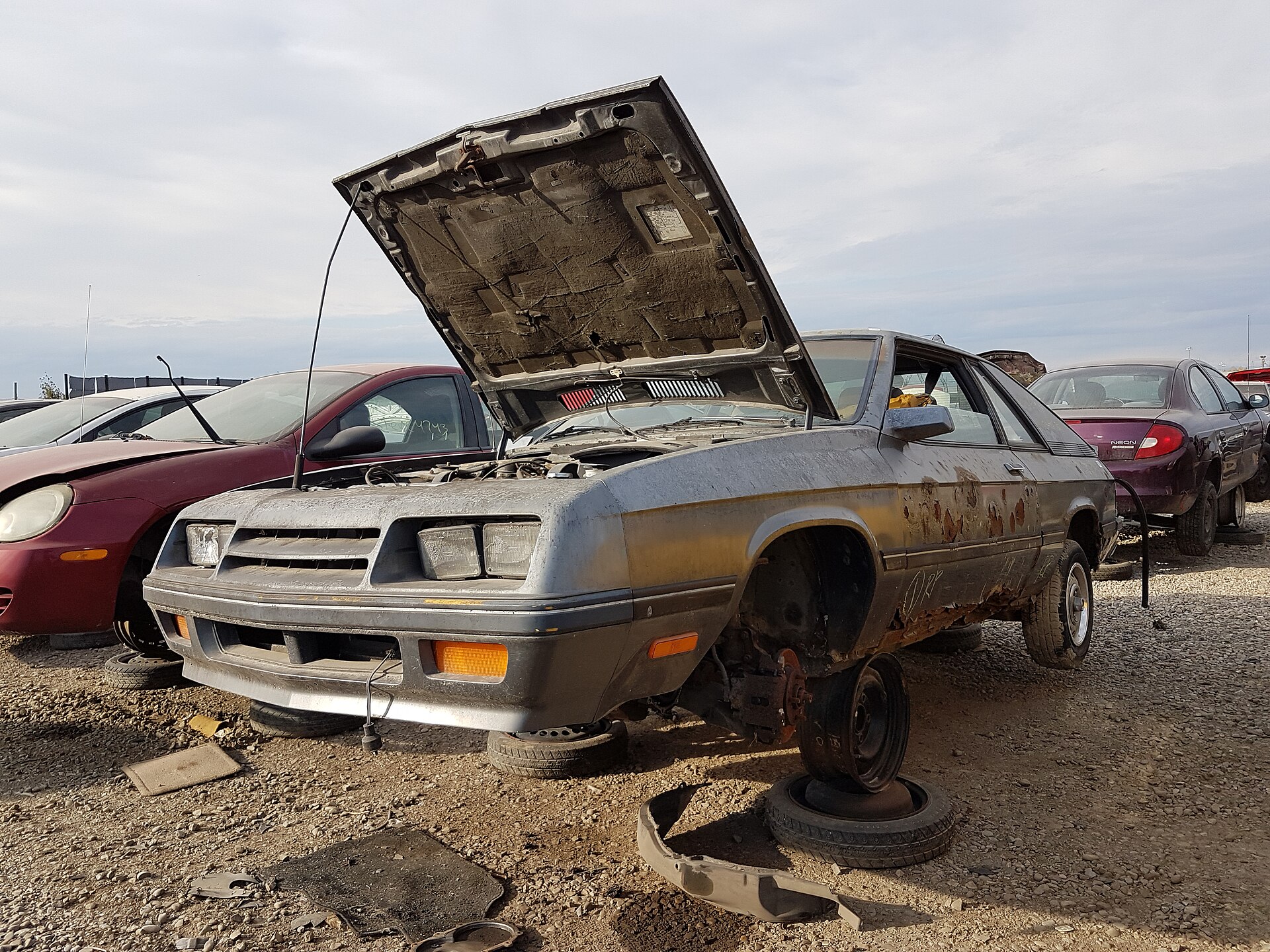
Featured image: “1986 Dodge Charger” by dave_7 (via Wikimedia Commons; originally published on Flickr), licensed under CC BY 2.0. Cropped and displayed in grayscale. It shows corrosion along a junked car’s lower door and rocker panel; it is not an Underbody Lab vehicle, application or test.
