
A rust-protection product can be described as “salt-spray tested,” “corrosion resistant,” “field tested” or “proven for 1,000 hours.”
Those phrases sound precise, but they do not tell you much until you know what was tested, how it was prepared, what environment it experienced and how failure was measured.
A meaningful corrosion test is more than putting two coated panels in salt water and taking a photograph later.
Good testing tries to control the variables that can change the result:
- the metal substrate;
- surface preparation;
- coating thickness;
- application method;
- cure or conditioning time;
- temperature;
- humidity;
- salt concentration;
- wet and dry periods;
- scratches or other intentional damage;
- number of specimens;
- failure criteria;
- measurement method.
And for automotive rust protection, one additional question matters:
Does the test represent the failure mechanism that occurs on a real vehicle?
That is why no single laboratory method tells the whole story.
Editorial disclosure: Underbody Lab did not conduct the tests discussed in this article. This guide explains published corrosion-test methods, standards and automotive studies so readers can understand what different test results actually mean.
At a glance
| Test or measurement | What it can help evaluate | Important limitation |
|---|---|---|
| Salt fog / salt spray | Controlled chloride exposure, quality or comparative performance under the specified chamber conditions | Test hours are not automatically vehicle years |
| Cyclic corrosion | Performance under changing salt, humidity and drying conditions | Field correlation still depends on the material and failure mode |
| Field / on-vehicle exposure | Behavior in an actual service environment | Slow, variable and harder to control |
| Coating thickness | Whether film build is consistent or within specification | Thickness alone does not prove protection |
| Scribe / damaged-film evaluation | Corrosion spread from an intentional defect | Does not reproduce every real type of coating damage |
| Adhesion testing | Whether a coating remains attached under a defined procedure | Adhesion is only one performance property |
| Abrasion / impact testing | Resistance to mechanical damage | Laboratory abrasion may not match road debris exactly |
| Mass loss | Amount of metal lost during exposure | Average loss can hide localized attack |
| Pitting measurements | Depth or extent of localized corrosion | Requires careful sampling and measurement |
| Visual rust/blister ratings | Location and extent of visible failure | Photographs alone can miss hidden or quantitative differences |
The useful result is rarely just:
Product A passed. Product B failed.
The useful result is:
Product A performed this way, on this substrate, at this thickness, under this exposure, using this failure criterion.
Start with the question the test is supposed to answer
Testing should begin with a clearly defined problem.
For example:
- Does a coating prevent red rust on clean steel?
- Does it slow corrosion after the film is scratched?
- Does it stay attached after water exposure?
- Does road-gravel damage change its protection?
- Does it wash away from an exposed surface?
- Does it creep into seams?
- Does it protect already-rusted steel?
- Does it reduce mass loss?
- Does it reduce the maximum pit depth?
- Does it survive one winter, several winters or only a laboratory chamber?
Those are different questions.
A test that is well designed for one may be poor evidence for another.
This is the same reason Article #9, Does Salt Spray Testing Predict Real-World Rust Protection?, does not treat a chamber-hour number as a direct service-life prediction.
1. Salt fog and salt spray testing
One of the best-known accelerated corrosion procedures is ASTM B117.
ASTM B117-26a defines the apparatus, procedure and conditions used to create a controlled salt-spray environment. ASTM says the practice has been used to generate relative corrosion-resistance information for metals and coated metals in a given chamber.
But the standard also makes an important limitation explicit: it does not prescribe the specimen, the exposure period for a particular product or the interpretation of the result.
ASTM also warns that stand-alone salt-spray performance has seldom correlated with natural-environment performance and that extrapolation should be considered only where suitable long-term atmospheric exposure data exist.
ISO 9227 provides another widely used family of salt-spray methods, including neutral salt spray, acetic acid salt spray and copper-accelerated acetic acid salt spray.
ISO describes these methods as useful for checking whether the quality of a metallic material, with or without corrosion protection, is maintained. It also states that the methods are not intended to rank different materials for corrosion resistance or to predict long-term corrosion resistance.
What a salt-fog test can do well
A controlled salt-fog procedure can be useful for:
- quality control;
- screening;
- comparing a defined system under the same test;
- specification compliance;
- research and development.
What it cannot establish by itself
A salt-fog result alone does not establish:
- a number of vehicle winters;
- how a coating handles road gravel;
- how a product behaves inside seams;
- whether it washes off in road spray;
- whether it performs the same on rusty and clean steel;
- how it behaves after years of real temperature and humidity cycles.
The chamber is one part of the experiment, not the entire conclusion.
2. Cyclic corrosion testing
Vehicles do not normally experience one continuous environment.
They get wet, dry, accumulate salt, warm up, cool down and encounter periods of high humidity or little exposure.
Cyclic corrosion tests attempt to reproduce some of that variation by moving specimens through defined stages.
SAE J2334 is an important automotive example.
SAE describes J2334 as a field-correlated laboratory procedure for evaluating a particular coating system, substrate, process or design. The current published version is SAE J2334_201604, stabilized in April 2016.
The procedure can therefore be useful as a validation or development tool.
But SAE also states that if corrosion mechanisms other than cosmetic or general corrosion are being examined, field correlation must be established.
That caveat is fundamental.
A cyclic test is not automatically realistic merely because it cycles.
Its usefulness depends on whether the cycle represents the environment and failure process that matter.
3. Real-world and on-vehicle exposure
The strongest way to know whether a laboratory procedure represents vehicle service is to compare it with actual service exposure.
Automotive researchers have done this.
Published automotive programs have compared accelerated laboratory tests with coated-steel specimens exposed on actual vehicles. Those comparisons allow researchers to examine whether laboratory methods reproduce important aspects of field corrosion behavior and material ranking.
That kind of work helped support development of field-correlated cyclic procedures such as SAE J2334.
Field exposure has major advantages:
- real weather;
- actual road contaminants;
- natural wet/dry periods;
- real temperature changes;
- vehicle-specific spray and geometry;
- actual mechanical exposure.
But it also has disadvantages:
- it can take years;
- weather varies;
- route and use vary;
- salt application varies;
- damage is harder to standardize;
- one winter may differ greatly from another.
So field testing and laboratory testing often work best together.
The laboratory provides control and acceleration. The field provides reality.
4. The substrate must be defined
A result means very little if you do not know what was under the coating.
“Steel panel” can hide important differences.
A test specimen might be:
- cold-rolled steel;
- hot-rolled steel;
- galvanized steel;
- zinc-alloy-coated steel;
- blasted steel;
- polished steel;
- factory-coated steel;
- previously rusted steel.
The same rustproofing material can behave differently depending on the substrate and surface condition.
This is especially important when comparing products marketed for existing rust.
A coating tested only on clean laboratory steel has not automatically been validated for a flaky or deeply pitted vehicle frame.
For practical preparation issues, see How to Prepare a Rusty Truck Frame for Undercoating.
5. Surface preparation is part of the test
Before a coating is applied, the test should document how the specimen was prepared.
That may include:
- solvent cleaning;
- degreasing;
- abrasive blasting;
- sanding;
- rust removal;
- conversion treatment;
- washing;
- drying;
- use of a primer;
- leaving existing rust in place.
Why does this matter?
Because coating failure can begin at the interface between the product and the substrate.
ASTM D870, a water-immersion practice for coatings, specifically notes that failure can result not only from the coating itself but also from substrate contamination or inadequate surface preparation.
So if two products are tested on differently prepared panels, the result is not a clean comparison.
6. Coating thickness must be measured
Film thickness is one of the easiest variables to overlook.
If one coating is applied substantially thicker than another, a durability difference may partly reflect film build rather than chemistry.
ASTM D7091 covers nondestructive measurement of dry-film thickness on metallic substrates using magnetic and eddy-current gages.
The standard also warns against relying on a single point because coating thickness can vary across a surface.
For a serious test, record:
- target thickness;
- measured thickness;
- number and location of readings;
- whether the product was wet, dry, soft or tacky when measured;
- whether the value represents one layer or the full coating system.
For soft, tacky or readily deformed coatings, the measurement method has to account for that material behavior. ASTM D7091 states that its standard procedures are not applicable where the coating is readily deformed under the load of the measuring gage or probe, and it provides separate provisions for soft or tacky coatings. A thickness method suitable for a hard dry film should therefore not automatically be applied to every non-drying rustproofing compound.
7. Intentionally damaged coatings can reveal different information
A perfect coating panel tells you how an intact film performs.
A scratched or scribed panel can tell you something different:
what happens when the protective film is breached?
ASTM D1654 covers evaluation of coated specimens after corrosive exposure and includes corrosion, corrosion-associated blistering, adhesion loss at a scribe and other film failures.
This type of testing can show whether corrosion spreads laterally from a defined defect.
That can be relevant to vehicles because underbody coatings can be damaged by:
- road debris;
- tools;
- fasteners;
- abrasion;
- repairs;
- stone impacts.
But an artificial straight scribe is still a laboratory defect.
It does not reproduce every chip, edge, seam or impact pattern found underneath a vehicle.
8. Adhesion is different from corrosion resistance
A coating can resist corrosion but have poor adhesion.
Or it can adhere extremely well while allowing corrosion to develop underneath.
Those are different properties.
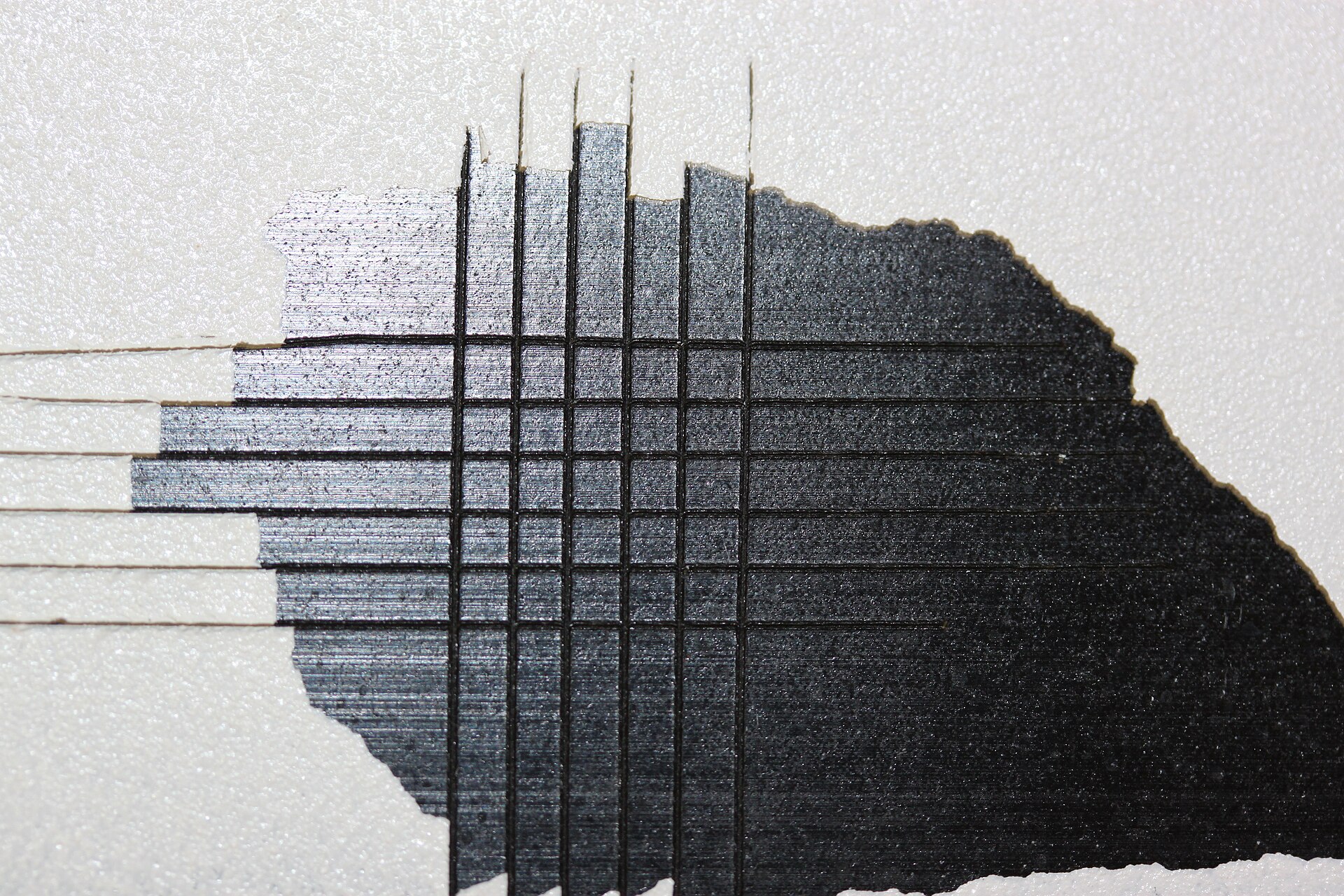
ASTM D3359 uses tape over cuts in a coating to evaluate whether adhesion is adequate for the intended application.
The current ASTM D3359-23 also makes clear that the method does not distinguish among very high levels of adhesion and that multicoat systems can fail between layers.
So a strong adhesion score is useful information — but it is not proof of complete corrosion protection.
This distinction becomes particularly important when comparing:
- permanent hard films;
- paints;
- primers;
- rubberized coatings;
- non-drying lanolin or wax products.
A test designed for one type of film may not make sense for another.
9. Abrasion, gravel and impact can be part of automotive testing
The underside of a vehicle is not a protected laboratory shelf.
Coatings can be hit by:
- gravel;
- sand;
- grit;
- road debris;
- tools;
- tire-thrown material.
ASTM D4060 is one standardized way of evaluating abrasion resistance of organic coatings on rigid flat surfaces using a Taber Abraser.
That test can quantify resistance to a defined mechanical wear procedure.
But automotive engineers can also design more service-specific damage.
A 2001 Auto/Steel Partnership study of underbody structural coatings used coated panels of low-carbon hot-rolled and pickled steel sheet and two cyclic corrosion programs. One laboratory procedure was based on SAE J2334 but added elevated-temperature bake steps and shot blasting.
The researchers said those modifications were intended to simulate two service stresses:
- heat near the exhaust system;
- coating damage from road-gravel impact.
That example illustrates an important testing principle:
when the service failure involves more than corrosion chemistry, the test may need more than corrosion chemistry too.
10. Water resistance and wash-off are not the same thing
Some rustproofing products are exposed to flowing water, road spray and repeated washing.
A stationary water-immersion test answers a different question from a high-pressure wash-off test.
ASTM D870 evaluates coating resistance during partial or complete water immersion. ASTM explicitly warns that immersion time should not be represented as an equivalent period of natural water exposure until quantitative correlation has been established.
For renewable or non-drying undercoatings, a useful wash-off test may need to measure the amount of material remaining after a defined spray, flow, pressure, temperature and exposure duration.
There is no reason to assume that a product doing well in static immersion will necessarily resist tire spray or pressure washing equally well.
The exposure mechanism has to match the question.
11. Mass loss gives a quantitative corrosion measurement
Visual rust can be useful, but appearance alone is not always enough.
One way to quantify corrosion of metal is to determine how much metal was lost.
ASTM G1 describes procedures for preparing, cleaning and evaluating corrosion-test specimens, including removing corrosion products so that mass loss can be determined without unnecessarily removing base metal.
ASTM G31 discusses laboratory immersion corrosion tests and emphasizes factors that can alter mass-loss results, including:
- solution composition;
- temperature;
- fluid motion;
- specimen support;
- solution volume;
- duration;
- cleaning;
- interpretation.
Mass loss can be much stronger evidence than a photograph when the question is:
how much metal was consumed?
But even mass loss has a limitation.
It averages damage across the specimen.
A surface can lose relatively little total mass while developing one deep localized pit.
The corrosion mode matters as much as the average corrosion rate. A mass-loss measurement can characterize overall metal loss while localized attack such as pitting or crevice corrosion may penetrate much more deeply at only a few locations. A useful test therefore has to measure the failure mode relevant to the service problem, not merely an overall corrosion rate.
12. Pit depth can reveal a different kind of failure
Localized corrosion can matter more than average corrosion.
A thin component may fail because of one deep pit even when most of its surface still looks acceptable.
ASTM G46 covers examination and evaluation of pitting corrosion in both laboratory and field settings.
Depending on the purpose, a corrosion program might record:
- maximum pit depth;
- average pit depth;
- pit density;
- area affected;
- distribution of pits.
That is why “amount of rust” is not one universal measurement.
A useful test chooses a metric that matches the type of damage being investigated.
13. Rusted-area percentage and visual ratings can still be useful
Not every test requires destructive measurements.
The percentage of surface showing corrosion, blistering or coating failure can provide useful comparative information when evaluation rules are defined in advance.
The key is consistency.
A better procedure specifies:
- lighting;
- inspection distance;
- rating scale;
- whether edges count;
- whether scribe corrosion is measured separately;
- how photographs are taken;
- who performs the rating;
- whether the evaluator knows which product is which.
Without a defined system, “looks better” is highly subjective.
Photographs should support measurements, not necessarily replace them.
14. Replicates are essential
Corrosion is variable.
Two nominally identical panels can produce different results.
ASTM B117 specifically says a testing program should include sufficient replicates to establish variability and notes that results can differ even between chambers operating within the standard’s allowed ranges.
That means a test with:
one panel of Product A vs. one panel of Product B
is weak evidence for a broad superiority claim.
A stronger design uses multiple specimens for each condition.
Replicates allow researchers to see whether an apparent difference is consistent or whether one panel was simply an outlier.
15. Controls make results interpretable
A test should have a useful reference condition whenever practical.
Possible controls include:
- untreated bare steel;
- the vehicle’s existing factory coating;
- a known benchmark coating;
- a no-damage specimen;
- a no-salt condition.
Controls help answer a basic question:
better than what?
If every panel rusts, an untreated control can show whether the coatings still reduced corrosion.
If a new formula appears excellent, an established benchmark can show whether the result is actually unusual.
Controls do not automatically make a study good, but without them many results are difficult to interpret.
16. Failure criteria should be defined before the test
A test becomes vulnerable to subjective interpretation when “failure” is decided afterward.
Possible failure criteria include:
- first red rust;
- a certain percentage of rusted area;
- maximum permissible scribe creep;
- blister rating;
- adhesion loss;
- minimum remaining film thickness;
- maximum mass loss;
- maximum pit depth;
- a specified amount of coating wash-off.
Different criteria can produce different winners.
A product might resist visible red rust well but lose more coating thickness. Another may retain its film but allow localized corrosion near damage.
The failure criterion needs to match the intended use.
17. Manufacturer testing vs. independent testing
A manufacturer test is not automatically bad evidence.
Manufacturers often have access to:
- formulations;
- application specifications;
- specialized laboratories;
- quality-control programs;
- long-duration internal data.
But manufacturer testing should be labeled for what it is.
Questions worth asking include:
- Did the manufacturer conduct or fund the work?
- Was the full procedure disclosed?
- Were all tested products identified?
- Were unfavorable results reported?
- Was a third-party lab involved?
- Can the data be independently reviewed?
- Were the measurements numerical or only photographic?
Independent testing reduces some conflicts of interest, but “independent” does not automatically mean well designed.
Study design still matters.
18. A published standard does not make every comparison valid
This is one of the most important concepts in corrosion testing.
A test can follow a recognized ASTM, ISO or SAE procedure and still be inappropriate for a particular claim.
For example:
- ASTM B117 can be run correctly, yet still not establish vehicle lifespan.
- An adhesion test can be run correctly, yet say little about wash-off.
- An abrasion test can be run correctly, yet not reproduce gravel impact.
- An immersion test can be run correctly, yet not reproduce an underbody’s wet/dry cycle.
Standards improve consistency.
They do not remove the need to ask whether the method addresses the actual question.
What a strong rust-protection test report should tell you
When Underbody Lab evaluates a published test, the useful checklist is:
- Who performed it?
- Who funded it?
- What exact products or materials were tested?
- What substrate was used?
- How was the substrate prepared?
- How was each product applied?
- What was the coating thickness or application quantity?
- Was there a cure or conditioning period?
- What test method or exposure was used?
- What were the temperature, humidity and salt conditions?
- Were wet/dry cycles used?
- Was the coating intentionally damaged?
- How many specimens were tested?
- What controls were included?
- How was failure defined?
- What measurements were recorded?
- Were complete numerical results reported?
- Was the method correlated with real service?
- What limitations did the researchers identify?
A test does not need every item to be useful.
But the more of these details are missing, the more cautious the conclusion should become.
What Underbody Lab would measure in a future head-to-head test
Underbody Lab has not yet conducted a controlled head-to-head corrosion test of retail rustproofing products.
If such testing is performed in the future, the goal should be to avoid a simplistic one-panel beauty contest.
Depending on the exact question, a stronger program could include:
- multiple panels per product;
- identical steel substrates;
- documented surface preparation;
- measured application quantity or film thickness;
- untreated controls;
- intentional scratches or damage where relevant;
- cyclic chloride exposure;
- controlled wet/dry periods;
- photographs under fixed conditions;
- percentage of rusted area;
- scribe creep;
- coating loss;
- mass loss where appropriate;
- maximum and average pit depth;
- failure location;
- statistical variability.
For products intended for cavities, a separate geometry or test method may be needed to evaluate creep and penetration.
For non-drying exposed-underbody products, a separate wash-off or road-spray procedure may be more meaningful than applying a paint-oriented adhesion test.
The test should follow the product’s intended use rather than forcing every chemistry into one convenient procedure.
Why one “winner” may not exist
One product may perform best in one metric and worse in another.
For example:
- one coating may resist abrasion well;
- another may creep back into small damaged areas;
- another may stay attached longer;
- another may be easier to renew;
- another may perform better inside a cavity.
If those products are intended for different jobs, forcing them into a single overall ranking can hide useful information.
That is why Lanolin vs. Wax-Based Undercoating and Fluid Film vs. Woolwax focus heavily on product behavior and intended use instead of pretending every category has one universal winner.
Bottom line
Rust-protection products can be tested in many legitimate ways.
The most common mistake is assuming that the name of the test — or the number of hours — tells you everything.
It does not.
A useful corrosion result depends on:
the question + substrate + preparation + application + thickness + exposure + damage + replicates + controls + measurement + failure criteria + field relevance.
Salt fog can be useful.
Cyclic corrosion can be useful.
Field exposure can be useful.
Adhesion, abrasion, mass loss and pit depth can all be useful.
But they measure different things.
The strongest evidence comes when the test method matches the actual service problem, the variables are documented, the result is measured rather than merely photographed, and the limitations are stated clearly.
That is the standard Underbody Lab will use when interpreting corrosion tests — and eventually when designing its own.
Learn more: Does Salt Spray Testing Predict Real-World Rust Protection? · Why Cars Rust Faster in the Snow Belt · How to Prepare a Rusty Truck Frame for Undercoating · Lanolin vs. Wax-Based Undercoating · Fluid Film vs. Woolwax · Rust Prevention · Undercoating
Sources
- ASTM International — ASTM B117-26a, Standard Practice for Operating Salt Spray (Fog) Apparatus. Active edition. Defines the controlled salt-fog environment and cautions against stand-alone natural-environment prediction and unsupported extrapolation.
- ISO — ISO 9227:2022, Corrosion tests in artificial atmospheres — Salt spray tests. Covers neutral, acetic-acid and copper-accelerated salt-spray methods for metallic materials with or without corrosion protection.
- SAE International — SAE J2334_201604, Laboratory Cyclic Corrosion Test — Stabilized April 2016. Field-correlated laboratory procedure for particular coating systems, substrates, processes or designs; other corrosion mechanisms require field correlation.
- ASTM International — ASTM D1654-24e1, Standard Test Method for Evaluation of Painted or Coated Specimens Subjected to Corrosive Environments. Covers evaluation of corrosion, corrosion-associated blistering, loss of adhesion at a scribe and other film failure after corrosive exposure.
- ASTM International — ASTM D7091-22, Standard Practice for Nondestructive Measurement of Dry Film Thickness of Nonmagnetic Coatings Applied to Ferrous Metals and Nonmagnetic, Nonconductive Coatings Applied to Non-Ferrous Metals. Covers magnetic and eddy-current measurement of coating thickness on metallic substrates and notes that thickness can vary across a surface.
- ASTM International — ASTM D3359-23, Standard Test Methods for Rating Adhesion by Tape Test. Evaluates whether coating adhesion is adequate under the specified procedure and describes important limitations of the rating method.
- ASTM International — ASTM D4060-25, Standard Test Method for Abrasion Resistance of Organic Coatings by the Taber Abraser. Controlled method for evaluating abrasion resistance of coatings on rigid, flat substrates.
- ASTM International — ASTM D870-25, Standard Practice for Testing Water Resistance of Coatings Using Water Immersion. Covers water-immersion testing and warns against equating laboratory immersion duration with natural exposure without established correlation.
- ASTM International — ASTM G1-25, Standard Practice for Preparing, Cleaning, and Evaluating Corrosion Test Specimens. Includes specimen preparation, corrosion-product removal, mass-loss determination and pitting-related evaluation.
- ASTM International — ASTM G31-21(2025), Standard Guide for Laboratory Immersion Corrosion Testing of Metals. Discusses factors affecting laboratory immersion and mass-loss testing and emphasizes detailed documentation of test conditions.
- ASTM International — ASTM G46-21, Standard Guide for Examination and Evaluation of Pitting Corrosion. Covers laboratory and field procedures for evaluating pitting corrosion.
- H. E. Townsend et al., “Progress by the Automotive and Steel Industries Toward an Improved Laboratory Cosmetic Corrosion Test,” SAE 912275 (1991). Compared cyclic laboratory methods with two-year on-vehicle exposures in Montreal and St. John’s.
- C. R. Shastry, Larry S. Thompson and Frank W. Lutze, “Performance of Coatings for Underbody Structural Components,” SAE 2001-01-0363 (2001). Automotive study using cyclic testing of frame coatings, including modified J2334 exposure with elevated-temperature and shot-blast steps intended to simulate exhaust heat and road-gravel damage.
- Dennis Davidson et al., “Perforation Corrosion Performance of Autobody Steel Sheet in On-Vehicle and Accelerated Tests,” SAE 2003-01-1238 (2003). Compared accelerated methods with identical on-vehicle specimens exposed in St. John’s and Detroit for periods up to seven years.
- P. R. Roberge, “Atmospheric Corrosion,” in Uhlig’s Corrosion Handbook, Third Edition, ed. R. Winston Revie (2011). Engineering background on atmospheric corrosion, corrosion-prevention compounds, field exposure and accelerated-test interpretation.
Featured image: “Cross-Cut Test Gt 5” by Hardcoreraveman, via Wikimedia Commons, CC0 1.0 public-domain dedication. Cropped and displayed in grayscale. The pictured test was not performed by Underbody Lab.
